
“Balloon column” sounds like one thing. It isn’t — it’s a whole family of floor pieces, from tight spiraling columns of color to giant foil numbers rising out of a balloon base. Knowing the names means you can ask for exactly the piece you’ve pictured, and we can quote exactly what you mean.
First, a quick note on names
There’s no official rulebook for balloon column names. Balloon artists build endless variations on a few core patterns, and different artists use different informal names for similar designs — you’ll also see columns called balloon towers or pillars online, which are the same thing. We say column, and below are the recognizable styles and patterns we work with, described the way we build them.
The core column patterns
Spiral Column
The most classic, traditional column pattern. It’s built by stacking clusters of four balloons — “quads” — with each layer rotated slightly, so the colors wind up the column in a twisting band. Change the color count and you change the look: a Two-Color Spiral gives you bold candy-stripe bands, while Three- and Four-Color Spirals wrap more ribbons of color around the piece.
Block Column
Same quad construction, but instead of rotating the colors, they’re stacked in horizontal bands — a stacked, banded look. That can mean chunky Horizontal Blocks of alternating color, or a Solid Color Column that reads as one clean, single-shade piece.
Chevron Column
Rotate the colors across the quads by a specific formula and the bands stop spiraling and start pointing: crisp zig-zag stripes, like stacked V shapes climbing the column. It’s a sharp, graphic look that photographs beautifully in two strong colors.
Organic Column
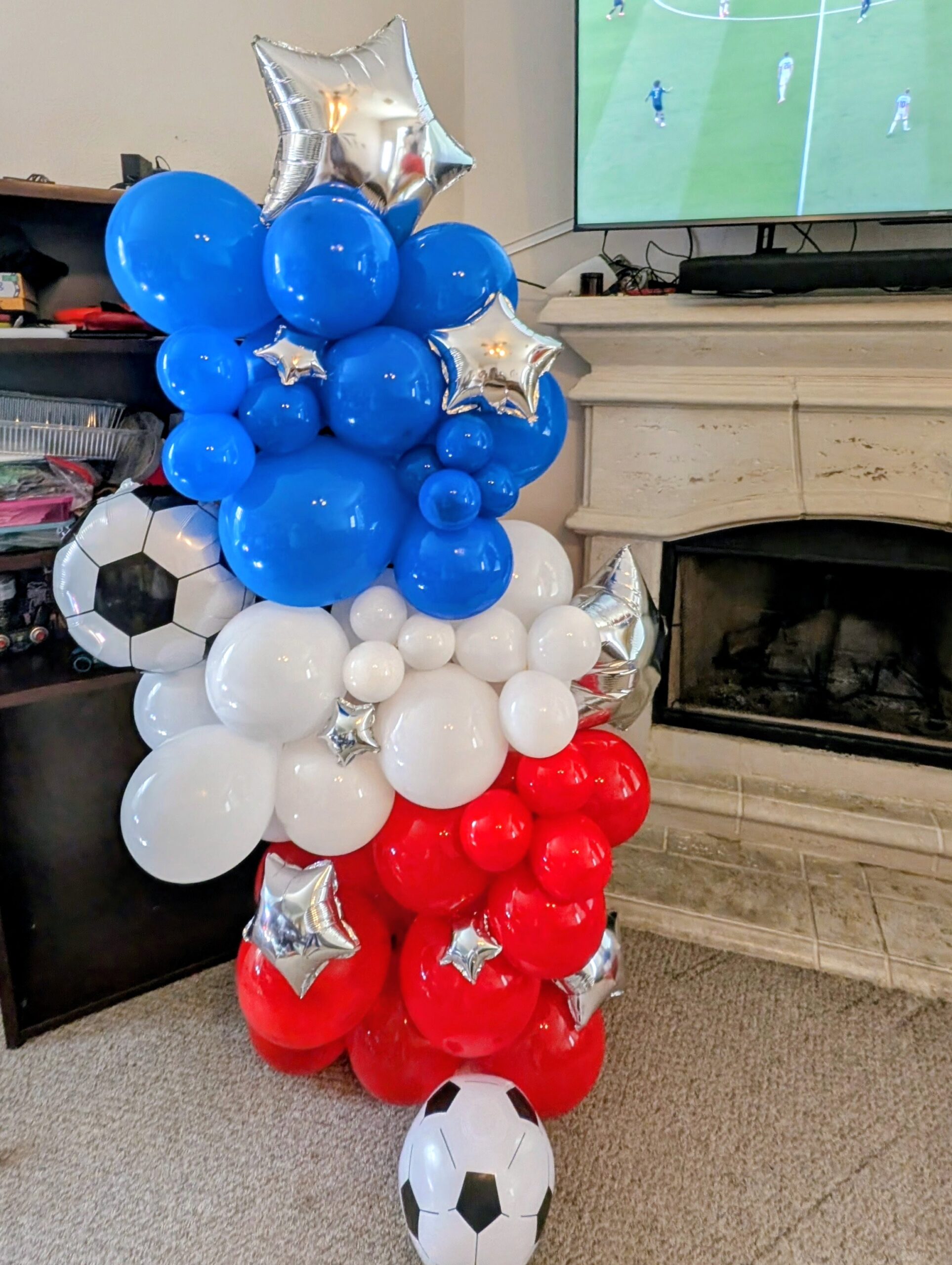
The pattern that breaks the pattern. An Organic column mixes balloon sizes — such as 5-inch, 11-inch, and 16-inch — in an intentionally irregular arrangement, so the piece has the same flowing, textured feel as an organic garland, stood up on its end.
Beyond the pattern: toppers, shapes, and floating builds
Topper-Focused Columns
Here the column is the pedestal and the topper is the star: a standard or spiral column built slightly shorter, anchored by a massive statement foil on top. Most commonly that’s a giant number for a birthday or graduation, but it can be a letter or a themed character shape.
Balloon Topiary / Lollipop Columns
A slender classic column base finished with a large, tightly packed round cluster — or one giant jumbo balloon — on top. The silhouette says it all: a lollipop, or a sculpted topiary tree.
Freeform / Specialty Shaped Columns
Custom structural builds that use specialized balloons and shaped mylars to mimic objects — a baby bottle for a shower, a castle turret, a pencil for a school celebration. If the shape matters more than the pattern, it lives here.

Floating Balloon Columns
A specialized, weight- or helium-supported column built without a rigid floor-to-ceiling metal frame. Depending on the design, it either uses helium to sway freely above a single base weight, or uses concealed tethers and clear structures to create the optical illusion of suspended balloons. Because “floating column” covers a few different construction approaches — helium-based builds, frameless air-filled tethered builds, and visual-illusion floating-base builds — you may run into other names for these online; they all describe versions of the same idea.

Number Stacks: not just a column with a number
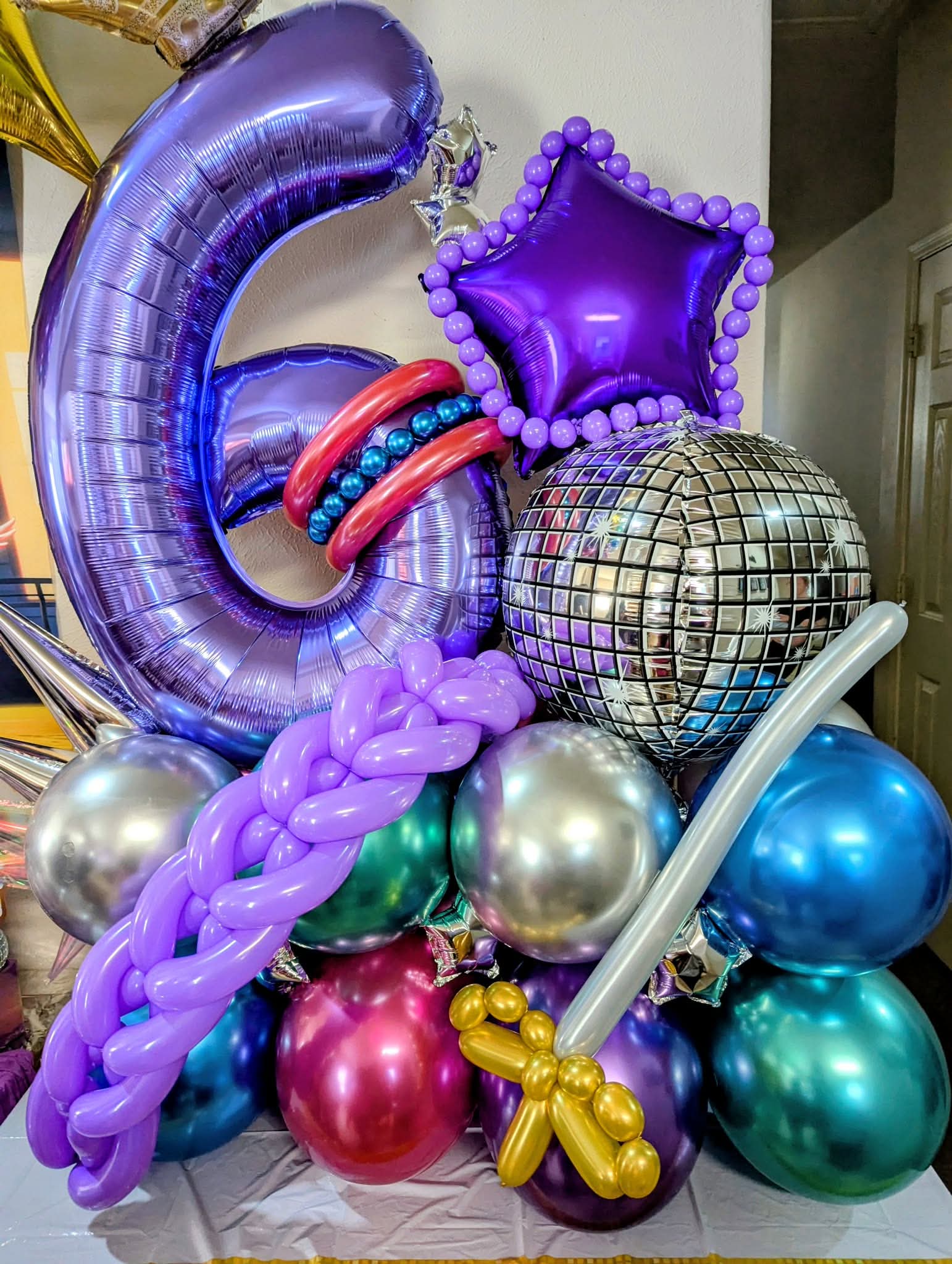
This is the distinction that saves the most confusion. A Number Stack is a freestanding, compact balloon structure built on a base, featuring large foil numbers or letters at the top — typically accented with small latex clusters, themed foil shapes, and custom details to celebrate an age, a milestone, or initials. It stands on its own; it isn’t a column wearing a number.
Put the two definitions side by side and the difference is clear: a Topper-Focused Column is a full column that carries a statement foil at its top, while a Number Stack is its own base-built piece designed around the number itself. If you’ve seen “a giant 6 made of balloons” and loved it, it was probably one of these two — and now you know how to ask which.
Saw a look you love? Just ask
These names cover the core patterns balloon artists build on, but they’re a vocabulary, not a menu. If you’ve saved a column with an ombré fade, a stacked look, a particular spiral, or any variation you can describe or show us in a reference photo, we can create a version built around your colors and your event. Name the pattern if you know it — or just share the picture.
See them in the Portfolio
Browse our Portfolio by design and scroll to the Columns & Number Stacks section to see these pieces at real events. Columns also pair beautifully with garlands — our guide to Classic vs. Organic garlands covers that side of the build.
Ready? Check your date
Tell us your date, your event, and the piece you have in mind — a named style or a reference photo both work. We’ll take it from there.
Ready when you are
Tell us your date. We’ll take it from here.
Quick, clear answers — no long forms, no back-and-forth. You’ll hear back within 24 hours, usually much sooner.